

 Feb 26, 2026

Have you ever wondered why a bag of potato chips stays crispy for months, or how a life-saving vaccine remains effective within its sealed blister pack? The secret doesn't just lie inside the package—it lies within the package itself. The material protecting these products possesses a critical characteristic known as low gas permeability.
In the world of material science and quality control, "low gas permeability" refers to a material's ability to resist the passage of gases—such as oxygen, carbon dioxide, or nitrogen—through its structure . Think of it as a security guard for your product. A material with high permeability is like a chain-link fence, allowing gases to pass through freely. Conversely, a material with low permeability is a solid concrete wall, effectively blocking unwanted molecules from entering or escaping.
For manufacturers, achieving this "concrete wall" standard is non-negotiable. In the food industry, oxygen ingress is the primary culprit behind spoilage and staleness. In pharmaceuticals, even trace amounts of moisture or oxygen can compromise the chemical stability of a drug, rendering it ineffective . But how do we move from the abstract concept of "low" to the concrete data required for production? The answer lies in precise, scientific measurement.
The Science of Certainty: How We Measure the Immeasurable
Defining a material as having "low permeability" is subjective; proving it requires data. To quantify this property, quality assurance laboratories around the world turn to advanced testing methodologies and instruments like the Saicheng Gas Permeability Tester.
The industry-standard method for determining gas permeability is the differential pressure method . Here’s how it works: a prepared film sample is mounted in a test chamber, acting as a physical barrier between a high-pressure gas chamber and a low-pressure collecting chamber. The system is evacuated to create a vacuum, and then a test gas (like oxygen) is introduced into the high-pressure side.
As gas molecules slowly permeate through the film, they enter the low-pressure side. By monitoring the pressure changes in this chamber with high-precision sensors, the instrument calculates the Gas Transmission Rate (GTR). This numerical value tells you exactly how "low" the permeability really is.
Saicheng Instrument: Bringing Precision to Barrier Testing
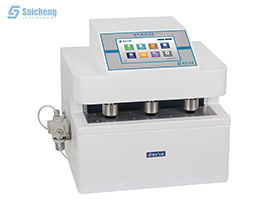
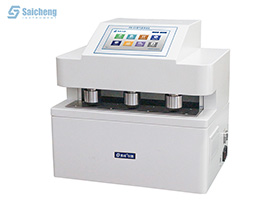
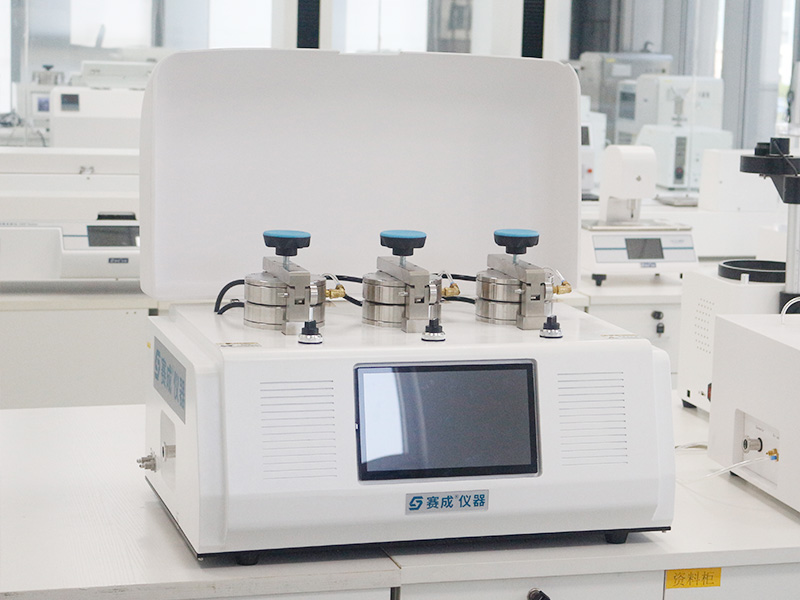
When it comes to the accuracy required for modern packaging development, the Saicheng G103H Gas Permeability Tester stands out as a pinnacle of testing technology . Designed to meet the rigorous demands of quality control and research laboratories, Saicheng instruments take the guesswork out of barrier testing.
Why choose Saicheng for your permeability testing?
- Uncompromising Accuracy: The G-Series testers feature high-precision pressure sensors and a sophisticated temperature control system with an accuracy of ±0.1°C . Since temperature fluctuations can drastically affect permeability rates, this precision ensures that your test results are reliable and repeatable.
- Versatility Across Applications: Whether you are testing plastic films for food packaging, aluminum foil for pharmaceuticals, or even evaluating the barrier properties of materials exposed to hazardous gases like methane, the Saicheng tester handles it . It supports a wide range of gases, including O₂, N₂, CO₂, and more.
- Efficiency and Throughput: Time is money in a production environment. Models like the G103H feature three independent test chambers, allowing you to test three different samples simultaneously under the same or different conditions without cross-contamination .
- Global Compliance: In a globalized market, your testing equipment must meet international standards. Saicheng testers fully comply with ASTM D1434 and ISO 2556, ensuring that your data is accepted worldwide .
Conclusion: Don't Guess—Test with Saicheng
Low gas permeability is more than just a material property; it is a promise of quality, safety, and extended shelf life. In an era where consumer expectations are higher than ever and regulatory scrutiny is intense, you cannot afford to rely on estimates.
Whether you are extending the shelf life of organic produce or ensuring the safety of medical devices, Saicheng Instrument provides the technology you need to quantify barrier performance with confidence. By integrating a Saicheng Gas Permeability Tester into your quality control workflow, you move beyond simply hoping your materials are "low enough"—you prove it.
To learn more about how Saicheng's testing solutions can support your quality assurance goals, contact their team of experts today.