

 Sep 11, 2024

The 3-point bending test is a fundamental method used to evaluate the mechanical properties of materials. This widely adopted technique helps in understanding the stiffness, yield strength, and breakage characteristics of various materials under flexural stress. In the pharmaceutical industry, this testing method is often applied to assess the breaking force of ampoules, a critical factor for ensuring safety and performance during storage and use. One of the most important tools used in this context is the Ampoule 3-Point Bend Tester, which provides an accurate measure of the force required to break glass ampoules. In this article, we will explore the essential components of this testing procedure, including the standard 3-point bending test, the ampoule breaking force test, the procedure, and its relevance to ISO 9187, a global standard for ampoule testing.
What is the Standard 3-Point Bending Test?
The 3-point bending test is a method used to measure the flexural strength and modulus of a material. The test consists of placing a sample material, such as metal, plastic, or glass, on two supports while applying a concentrated load at the midpoint between these supports. The sample is subjected to flexural or bending stress, which eventually causes it to fail (break). The applied force and the corresponding deformation are recorded during the test to evaluate the material’s mechanical properties.
Key parameters determined by the 3-point bending test include:
- Flexural Strength: The maximum stress a material can withstand before failure.
- Modulus of Elasticity: The material’s stiffness or resistance to bending.
- Flexural Strain: The amount of deformation experienced by the material.
The 3-point bending test is widely used across industries, particularly for materials like glass, polymers, and ceramics, which often experience bending stress in their applications. This test is highly useful for predicting how a material will behave under real-world conditions where bending and flexural loads are common.
Ampoule Breaking Force Test
Ampoules are small, sealed vials typically made of glass, used to contain and preserve liquids, including medications and chemicals. Ensuring that these ampoules can withstand sufficient force to prevent premature breakage during handling, transportation, and storage is crucial. On the other hand, they should also be easy to open when needed. The ampoule breaking force test aims to determine the force required to break or fracture the ampoule. This ensures that the ampoule is neither too fragile nor too difficult to open.
In the pharmaceutical industry, this test is critical for ensuring product safety and usability. Ampoules that break too easily can lead to contamination or loss of product, while those that are too difficult to open may cause inconvenience or injury to users. The Ampoule 3-Point Bend Tester is specifically designed to provide accurate measurements of the breaking force needed to open an ampoule.
Ampoule Breaking Test Procedure
The procedure for the ampoule breaking force test generally follows the principles of the standard 3-point bending test but is adapted for the specific characteristics of ampoules.
- Sample Preparation: A representative number of ampoules are selected from a production batch to conduct the test. The ampoules are typically filled with liquid and sealed, as they would be in a real-world scenario.
- Positioning: The ampoule is placed horizontally on two lower supports in the testing apparatus. These supports are spaced a specified distance apart, depending on the size and shape of the ampoule.
- Loading: A vertical force is applied to the midpoint of the ampoule using a probe or loading mechanism. The force is applied gradually and uniformly to prevent any premature breakage or damage.
- Force Measurement: As the load increases, the ampoule deforms until it fractures. The amount of force required to cause the break is recorded, providing a measurement of the ampoule’s breaking strength. In some cases, the force-displacement curve is also analyzed to assess how the ampoule behaves under increasing loads.
- Analysis: The recorded data is analyzed to determine the average breaking force for the tested ampoules. This information helps manufacturers ensure that their ampoules meet specified requirements for strength and usability.
ISO 9187: The Global Standard for Ampoules
ISO 9187 is the international standard that governs the design, manufacturing, and testing of ampoules, specifically focusing on glass ampoules used in the pharmaceutical industry. This standard ensures that ampoules are manufactured to meet stringent requirements for breakage resistance, dimensional accuracy, and usability. The breaking force test is a key component of ISO 9187, as it provides a method for verifying that ampoules meet the necessary strength criteria.
Under ISO 9187, ampoules must be tested to determine the minimum and maximum forces required to break them. The breaking force should be high enough to prevent accidental breakage during handling and transportation but low enough to allow easy opening by healthcare professionals or end-users. The standard outlines various testing methods, including the 3-point bend test, which provides a reliable and reproducible way to measure the breaking strength of ampoules.
Compliance with ISO 9187 is essential for pharmaceutical manufacturers, as it ensures that their products are safe, reliable, and fit for use. Meeting this standard also helps to reduce the risk of product recalls or regulatory issues, as well as ensuring the quality and safety of the medications they contain.

What is a 3-Point Bend Apparatus?
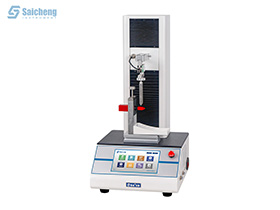
A 3-point bend apparatus is the equipment used to perform the 3-point bending test. It consists of three main components: the two lower supports and the upper loading mechanism. The sample material (in this case, the ampoule) is placed on the two supports, and a force is applied at the midpoint by the upper loading probe.
In an Ampoule 3-Point Bend Tester, the apparatus is designed specifically to hold ampoules securely in place and apply force in a controlled and precise manner. The key components of this apparatus include:
- Supports: The lower supports are adjustable to accommodate different ampoule sizes and shapes.
- Loading Mechanism: The upper loading probe applies force at a consistent rate, ensuring accurate and repeatable results.
- Force Sensors: Sensitive force sensors measure the exact amount of force being applied to the ampoule, providing detailed data for analysis.
- Data Acquisition System: The recorded data is processed and displayed in real-time, allowing operators to monitor the test and ensure that it is performed correctly.
The Ampoule 3-Point Bend Tester is essential for pharmaceutical manufacturers who need to verify the quality and safety of their products. By accurately measuring the breaking force of ampoules, this apparatus helps ensure that products meet industry standards and are safe for use by healthcare professionals and patients alike.
Conclusion
The Ampoule 3-Point Bend Tester plays a critical role in the pharmaceutical industry by providing a reliable and accurate method for assessing the breaking strength of glass ampoules. Based on the principles of the standard 3-point bending test, this testing method ensures that ampoules are strong enough to withstand handling and transportation, while also being easy to open when needed. The procedure for conducting this test is straightforward, involving the gradual application of force to an ampoule until it fractures.
Compliance with ISO 9187 is crucial for pharmaceutical manufacturers, as it ensures that ampoules meet the necessary safety and usability requirements. The Ampoule 3-Point Bend Tester helps manufacturers meet these standards by providing precise measurements of ampoule breaking force, ensuring that products are both safe and functional.